


Relation between Resistance and Temperature | A Story
Relation between resistance and temperature, want to know about it? Resistance is the ability of a substance to interfere with the conduction of electricity....

TFT LCD Display Module 3.5 Inch with Touch: Setup, Pin Configuration
The TFT LCD Display Module 3.5 inch with Touch is an essential component for interactive automation projects. With its ability to display vivid texts...
What is Discrete-Time Signals and Systems
Discrete-time signals play a vital role in modern signal processing, offering specific values at distinct points in time. Unlike analog signals, which provide continuous...
What is Signal in Electronics: Types and Characteristics in Electronics
Signals play a crucial role in the world of electronics, functioning as the lifeblood of modern technology. Without signals, electronic devices would be inoperative,...
What is a Digital Signal: How Electrical Signals Form Logic
Digital signals play a crucial role in modern electronics by converting electrical signals into logical patterns of 1s and 0s. Unlike analog signals, which...
Building an Astable Multivibrator Circuit Using a 555 Timer IC
An Astable Multivibrator Circuit is a fundamental electronic configuration that generates continuous square waves without external triggering. Using a 555 Timer IC, you can...
Building a Monostable Multivibrator Circuit Using 555 Timer IC
A Monostable Multivibrator Circuit, using a 555 Timer IC, is a practical electronic project to generate precise single pulses in response to an external...
Clipping and Clamping Circuits: Functions, Types, Applications
Clipping and clamping circuits are essential topics in electronics, playing crucial roles in shaping and controlling signal waveforms. Clipping circuits modify the amplitude of...

What is MOSFET: Types, Structure, and Operation
A MOSFET (Metal Oxide Semiconductor Field Effect Transistor) is a crucial electronic device used to control the flow of electrical current in circuits. Known...
What Is a Rectifier? What It Does, Types & Uses
A rectifier converts AC into DC by letting current flow one way through diodes. See what it does, half-wave vs full-wave vs bridge, ripple, efficiency and uses.
What is Transistor: Structure, Types, and Functions in Circuits
A transistor is a key electronic component used in devices like smartphones and TVs. It has three terminals—base, emitter, and collector—and functions as both...
Bipolar Junction Transistor (BJT): Structure, Working Principle, and Types
The full form of BJT is Bipolar Junction Transistor, where Bipolar refers to both electrons and holes. Junction means connection, and the word Transistor...
Oscillator: Types, Feedback Mechanisms, and Key Components Explained
An oscillator is an electronic device that generates and amplifies frequencies across various ranges according to the needs of different devices.
Oscillators are fundamental electronic...
Full Wave Rectifier & Bridge Rectifier: Types, Components, and Operation
The Full Wave Rectifier & Bridge Rectifier are crucial components in converting alternating current (AC) into direct current (DC) for various electronic applications. These...
Basic Logic Gate (AND, OR, NOT) Types, Function & Truth Tables
Logic gate is a fundamental building block of digital circuits. These electronic circuits take one or more input signals and produce a single output...
Half Wave Rectifier: Operation, Components, and Applications
A half wave rectifier is an essential component in the field of electronics, designed to convert alternating current (AC) into pulsating direct current (DC)....
Microcontroller & Microprocessor: Basics, Functions, and Applications
Many of us have heard of the terms microcontroller and microprocessor. For those who work with electronics, microcontrollers are a fascinating subject.
However, many of...
Understanding LED: Construction, Working Principles, Applications
LED, or Light Emitting Diode, have revolutionized the world of electronics with their efficiency, durability, and versatility. As a cornerstone of modern electronic devices,...
Diode and Transistor Leg Identification, Testing, and Troubleshooting Methods
Diode testing, transistor testing, and troubleshooting methods are fundamental skills for anyone working with electronic components. Proper identification of diode legs (anode and cathode)...
Understanding Digital Display Technologies: LED, LCD, and Gas Discharge
Digital Display Technologies encompasses a range of methods that are used to present information in a clear, visual format. These technologies include LED (Light...
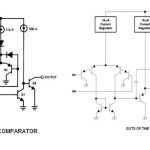
Choosing Between LM339 and LM324 Op-Amps: An In-Depth Comparison
Op-amps, or operational amplifiers, are the unsung heroes of the electronics world, driving countless circuits with precision and reliability. But when it comes to...
Can You Plug a Microwave into an Extension Cord | Safely Use Ovens
It is very common to have questions like: can you plug a microwave into an extension cord? Today I am going to answer this...

Center Tap Full Wave Rectifier With Capacitor Filter: Circuit Diagram and Explain Step by...
We have already known about Bridge Rectifier With Capacitor Filter in our previous article. I am going to discuss another way to rectify an...

Bridge Rectifier With Capacitor Filter: Circuit Diagram and Explain Step by Step
Have you heard about people with dual personalities? It's very tough to handle this type of person who doesn't bear a fixed manner. In...