


A Light Emitting Diode (LED) is a semiconductor device that emits light when current flows through it in the forward direction. Unlike ordinary diodes, LEDs convert electrical energy into visible light (or infrared, depending on material).
Working Principle (Explained with the Images)
- An LED is made of p-type and n-type semiconductor materials joined together (PN junction).
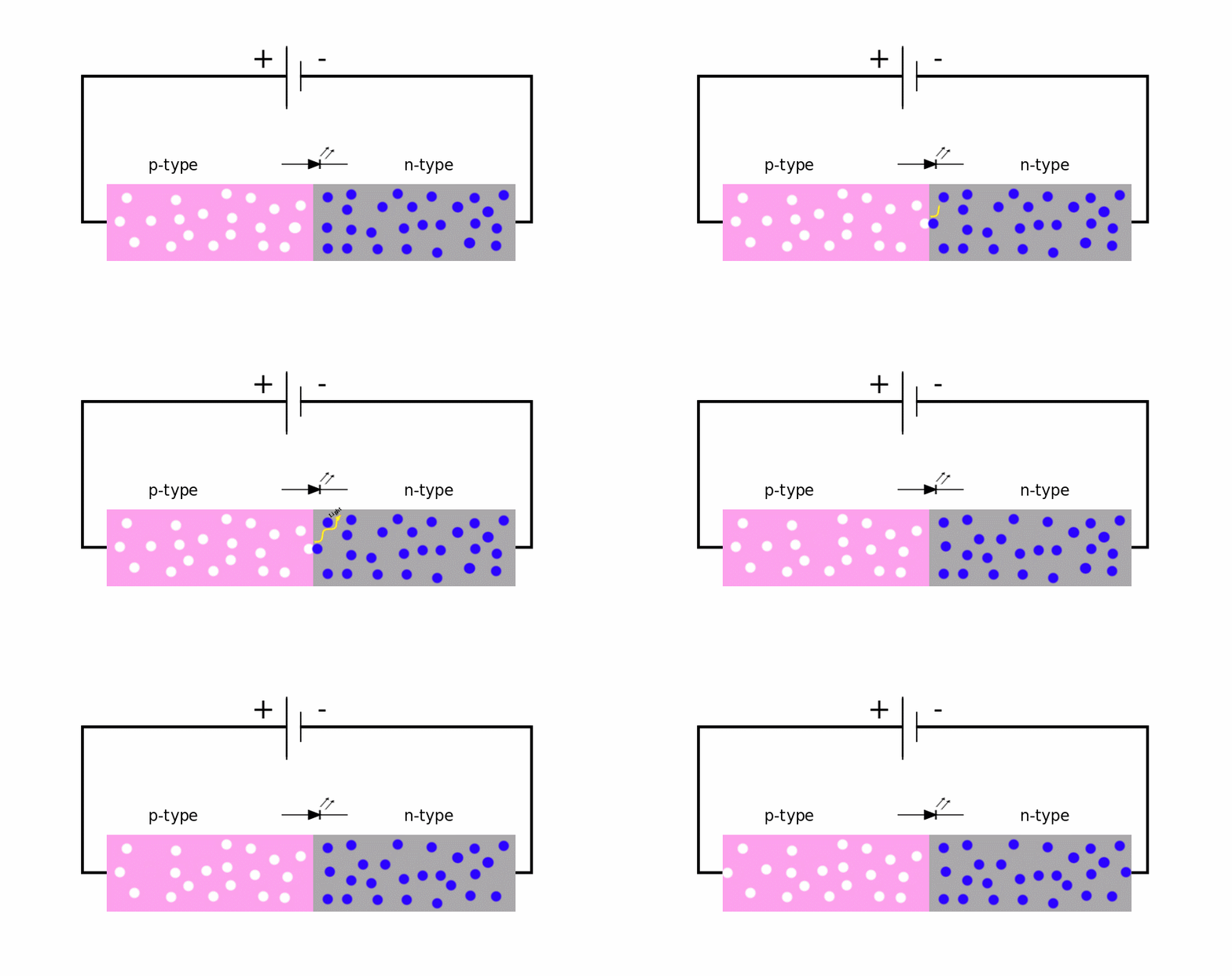
- When forward biased (positive connected to the anode, negative to the cathode), electrons from the n-type and holes from the p-type recombine at the junction.
- During recombination, energy is released in the form of photons (light). The color of light depends on the material and bandgap energy of the semiconductor.
In the Images:
- You can see electrons (blue dots) moving from the n-side and holes (white dots) moving from the p-side. When they meet, light is emitted.
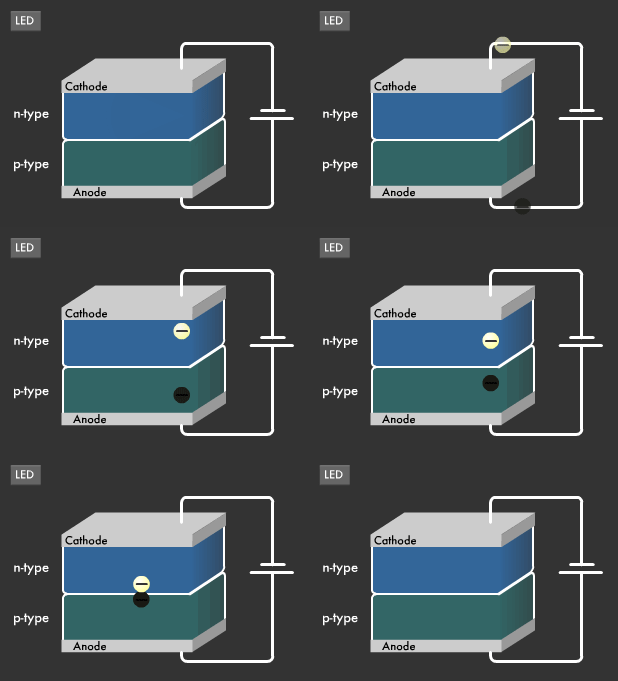
- The second GIF shows the layered LED structure with the Anode (p-type) and Cathode (n-type) connected to a power source.
Key Features of LEDs
- Low Power Consumption – Very energy efficient compared to incandescent lamps.
- Small Size – Can be used in compact circuits.
- Long Life Span – Typically lasts tens of thousands of hours.
- Different Colors – Achieved by using different semiconductor materials (e.g., GaAs, GaP).
- Fast Switching – Suitable for displays and communication.
Applications of LEDs
- Indicator lamps and status lights.
- Digital displays (TVs, calculators, signboards).
- Lighting (bulbs, streetlights, automotive headlights).
- Remote controls and optical communication.
FREE PRACTICE TOOL
Think you'd pass this on a real exam?
Test what you just read with instant-feedback quizzes built around real code questions — not generic trivia.
5
Code standards
10,000+
Active learners
100%
Free to start
✓
Instant explanations on every answer, right or wrong
✓
NEC, BS7671, AS/NZS, CEC, and DIN VDE covered
✓
Bite-sized quizzes you can finish in 5 minutes
✓
No signup required to try your first quiz
Try a free quiz now →
No account needed · Takes less than 2 minutes