


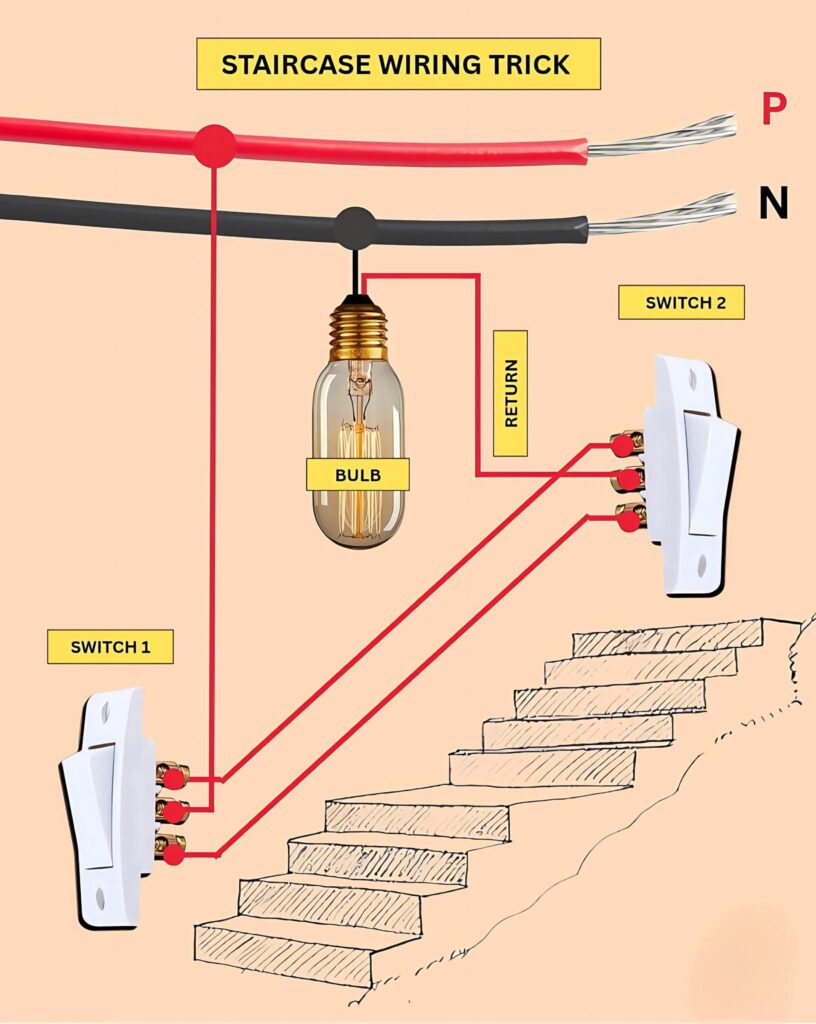
This diagram shows a staircase wiring circuit, a smart setup that allows you to control a single light from two different switches — one at the top of the stairs and one at the bottom. It’s widely used in homes, apartments, and corridors for convenience and safety.
Key Components:
- Two 2-way Switches: Enable control of the same bulb from two locations.
- Bulb: The load connected to the switches.
- Phase (P) and Neutral (N) wires: Supply the electrical power.
- Return wire: Connects between the switches to complete the circuit.
Working Principle:
When either switch is toggled, the circuit changes path, turning the bulb ON or OFF regardless of the other switch’s position. This makes it perfect for staircases, hallways, or rooms with dual entry points.
Study smarter with VoltageLab
Built for electricians, apprentices, and electrical engineers who want faster practice and better exam prep.
⭐️ Join thousands of electricians upgrading their skills
⚡ Tip: Always use proper insulation and check switch terminals before connection to ensure safety.
FREE PRACTICE TOOL
Think you'd pass this on a real exam?
Test what you just read with instant-feedback quizzes built around real code questions — not generic trivia.
5
Code standards
10,000+
Active learners
100%
Free to start
Instant explanations on every answer, right or wrong
NEC, BS7671, AS/NZS, CEC, and DIN VDE covered
Bite-sized quizzes you can finish in 5 minutes
No signup required to try your first quiz
No account needed · Takes less than 2 minutes