


Transistor working principle
Transistor working principle
Transistor working principle: A transistor is one kind of semiconductor device that is used to amplify or switch electronic signals and electrical power. A transistor is very simple and also complex. The transistor can work either the amplifier or switch.
Study smarter with VoltageLab
Built for electricians, apprentices, and electrical engineers who want faster practice and better exam prep.
⭐️ Join thousands of electricians upgrading their skills
At the time of amplifier, it takes low electric current at one end and produce much bigger electric current at the other in the output. It’s one kind of current booster. That comes in extremely valuable in things like portable hearing assistants, one of the primary things individuals utilized transistors for.
The hearing aid has a tiny microphone in it that picks up sound from the world around you and turn them into fluctuating electric current. These are fed into a transistor that lifts them and forces a small amplifier, so you hear a substantially louder form of the sounds around you.
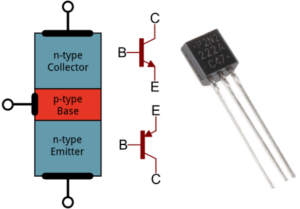
Transistor also can perform like switches. When low current flow through one part of the transistor that can make a much bigger current flow through another part of it. In another hand, the little current switches on the bigger one.
It is how all computer chips work. A memory chip usually contains hundreds of millions or even billions of transistors, each of them can switch on or off individually. Since each transistor can be in two distinct states, it can store two different numbers, zero and one. With billions of transistors, a chip can store billions of zeros and ones, and almost as many ordinary numbers and letters.
A transistor is a three terminal device.
- Base: It is responsible for activation the transistor
- Emitter: It is responsible for the negative lead
- Collector: It is responsible for the positive lead
Actually, the basic idea of the transistor is used to control the flow of current through one channel by varying the intensity of a much smaller current that’s flowing through a second channel.
FREE PRACTICE TOOL
Think you'd pass this on a real exam?
Test what you just read with instant-feedback quizzes built around real code questions — not generic trivia.
5
Code standards
10,000+
Active learners
100%
Free to start
Instant explanations on every answer, right or wrong
NEC, BS7671, AS/NZS, CEC, and DIN VDE covered
Bite-sized quizzes you can finish in 5 minutes
No signup required to try your first quiz
No account needed · Takes less than 2 minutes