

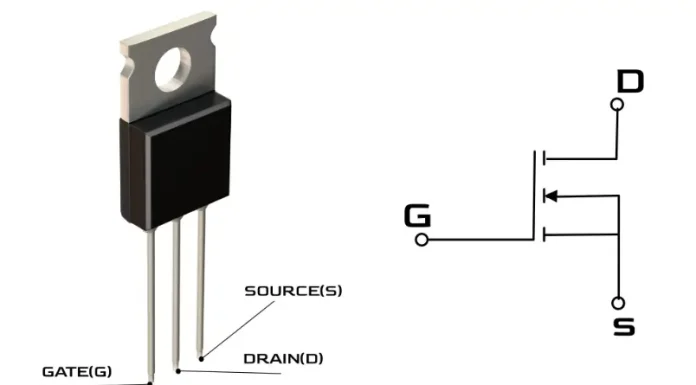
A MOSFET (Metal Oxide Semiconductor Field Effect Transistor) is a crucial electronic device used to control the flow of electrical current in circuits. Known...
A rectifier converts AC into DC by letting current flow one way through diodes. See what it does, half-wave vs full-wave vs bridge, ripple, efficiency and uses.
A transistor is a key electronic component used in devices like smartphones and TVs. It has three terminals—base, emitter, and collector—and functions as both...
The function of a fuse is to open a circuit when current exceeds a safe limit. Learn how a fuse works, fusing current, cut-off current, fusing factor, pros and cons.
Synchronous motors play a critical role in various industrial and mechanical applications. Unlike other motors, they operate at a constant speed from no load...
The full form of BJT is Bipolar Junction Transistor, where Bipolar refers to both electrons and holes. Junction means connection, and the word Transistor...
DC generator play a crucial role in converting mechanical energy into electrical energy, making them indispensable in various industrial and commercial applications. Understanding the...
The delta connection is a fundamental wiring method used in three-phase electrical systems, particularly for connecting motors. In this configuration, the windings of the...
An oscillator is an electronic device that generates and amplifies frequencies across various ranges according to the needs of different devices.
Oscillators are fundamental electronic...
The Full Wave Rectifier & Bridge Rectifier are crucial components in converting alternating current (AC) into direct current (DC) for various electronic applications. These...
Logic gate is a fundamental building block of digital circuits. These electronic circuits take one or more input signals and produce a single output...
Operating a generator requires careful preparation and adherence to specific safety guidelines to prevent accidents and ensure smooth functioning. Whether you are starting the...