

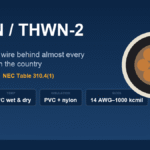
THHN / THWN-2 Wire Explained: Ratings, Uses & Where It’s Allowed
THHN wire meaning, THHN vs THWN vs THWN-2 ratings, ampacity from NEC Table 310.16, and exactly where the Code allows it. A field guide for electricians.
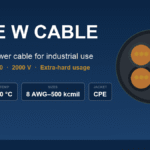
Type W Cable Explained: Portable Power Cable Ratings, Uses & NEC 400 Rules
Type W is a 2000 V portable power cable under NEC Article 400 — not a wet-location suffix. Ratings, construction, ampacity from Table 400.5(B), and where the Code permits and prohibits it.

NEC Chapter 9 Table 8 Explained: Conductor Properties Guide
NEC Chapter 9 Table 8 lists each conductor's circular mils, stranding, diameter and DC resistance at 75°C. How to read it, key values and voltage drop examples.
NEC Table 310.16 Ampacity Chart: How to Read It (60/75/90°C)
NEC Table 310.16 ampacity chart: copper values, 60/75/90°C columns, 110.14(C) termination limits, and when to correct or adjust ampacity.
What Does NEC Stand For? Understanding the National Electrical Code
NEC stands for National Electrical Code.
In the electrical trade, the NEC is one of the most important code books you will use. NFPA describes...
NEC 310.16 Ampacity Chart Explained for Electricians
If you hear electricians talk about the “NEC ampacity chart,” they usually mean Table 310.16. That table gives the ampacities of insulated conductors in...
Grounding Electrode Conductor (GEC) Sizing Questions on NEC Electrical Exams (Table 250.66)
Grounding electrode conductor (GEC) sizing questions are high-frequency on Journeyman exams because they test whether you can correctly use NEC Table 250.66—especially when the...