

Ohm’s Law
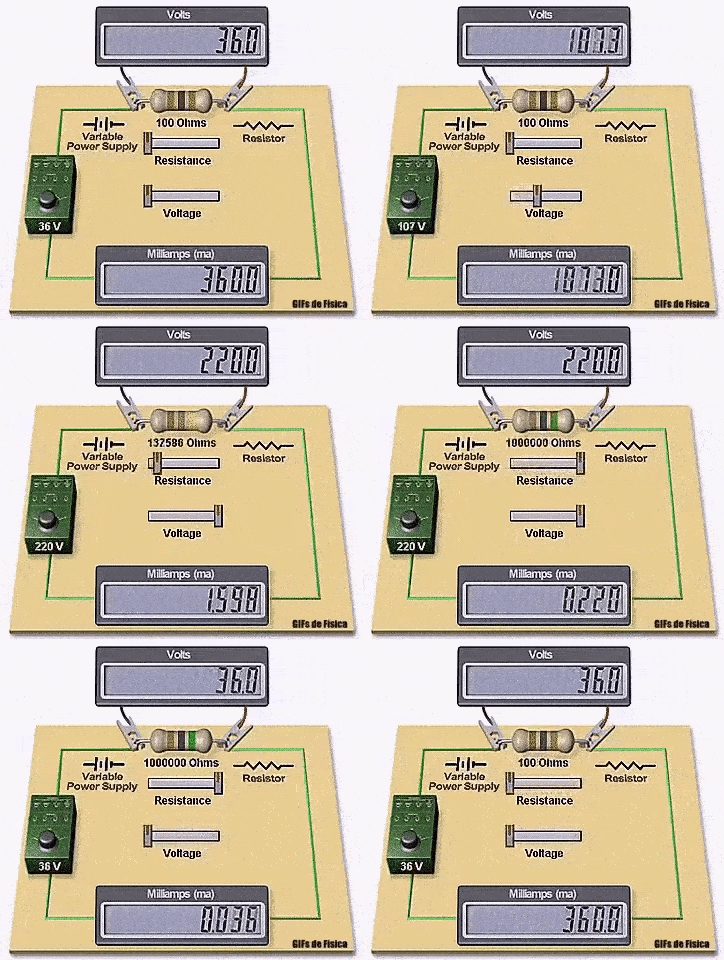
This animation demonstrates Ohm’s Law, the fundamental relationship between voltage (V), current (I), and resistance (R) in a DC circuit.
It shows how changing the supply voltage or resistance directly affects the current flowing through a resistor.
Study smarter with VoltageLab
Built for electricians, apprentices, and electrical engineers who want faster practice and better exam prep.
⭐️ Join thousands of electricians upgrading their skills
Ohm’s Law is the foundation of all electrical calculations in both basic and advanced circuits.
Key Components:
- Variable Power Supply: Provides adjustable DC voltage to the circuit.
- Resistor (100 Ω): Limits the flow of current and provides a fixed resistance value.
- Voltage Display: Shows the applied voltage across the resistor.
- Current Display (mA): Shows the current flowing through the resistor according to Ohm’s Law.
Working Principle:
Ohm’s Law states:
V = I * R
This means the current in a DC circuit depends on the voltage applied and the resistance present.
In the GIF:
- The supply voltage is 36 V
- The resistor value is 100 Ω
- The current shown is 360 mA
This matches Ohm’s Law:
Pass your electrical exam the first time
Practice real NEC exam questions with full code-referenced explanations and progress tracking — built for journeyman, master and apprentice exam prep.
Thousands of NEC practice questions with code-referenced answers
I = V / R
I = 36 / 100
I = 0.36 A
I = 360 mA
The animation clearly shows how the voltage, resistance, and current displays adjust together to follow this exact relationship.
⚡ Tip:
If you increase voltage, current increases.
If you increase resistance, current decreases.
Always use the correct resistor to prevent overheating or excessive current flow.
FREE PRACTICE TOOL
Think you'd pass this on a real exam?
Test what you just read with instant-feedback quizzes built around real code questions — not generic trivia.
5
Code standards
10,000+
Active learners
100%
Free to start
Instant explanations on every answer, right or wrong
NEC, BS7671, AS/NZS, CEC, and DIN VDE covered
Bite-sized quizzes you can finish in 5 minutes
No signup required to try your first quiz
No account needed · Takes less than 2 minutes