

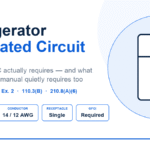
Does a Refrigerator Need a Dedicated Circuit? NEC Answer
A dedicated circuit for a refrigerator is permitted by NEC 210.52(B)(1) Ex. 2, not required — but the appliance manual and 110.3(B) usually make it mandatory.
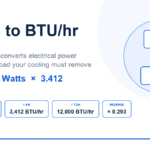
Watts to BTU/hr: Conversion Formula for Electrical Heat Load
Convert watts to BTU/hr by multiplying by 3.412142. Formula, conversion chart, tons of cooling, and how to work out which watts actually become heat.
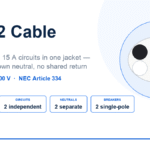
What Is 14-2-2 (Double-Neutral) Cable and When to Use It
14-2-2 cable holds two hots, two separate neutrals and a ground — two independent 15 A circuits in one jacket. Colours, derating, box fill and when to use it.
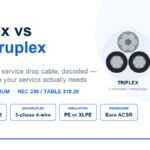
Triplex vs Quadruplex Service Cable Explained
Quadruplex has three insulated conductors plus a bare neutral messenger; triplex has two. Construction, ampacity, code names and the NEC rules that apply to each.
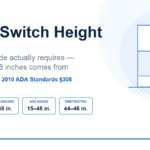
Light Switch Height: NEC & ADA Mounting Requirements
Light switch height explained: the 6 ft 7 in. maximum in NEC 404.8(A), the 15-48 in. ADA reach range, and why 48 inches is trade practice and not code.
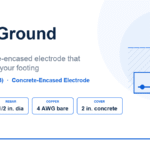
Ufer Ground (Concrete-Encased Electrode) Explained: NEC 250.52(A)(3)
Ufer ground explained: what NEC 250.52(A)(3) requires of a concrete-encased electrode, rebar vs 4 AWG copper, GEC sizing, and what disqualifies a footing.

Low, Medium & High Voltage: Definitions and Class Boundaries
Low, medium and high voltage ranges: low ≤1000 V, medium 1 kV–100 kV, high 100–230 kV (ANSI/IEEE), plus how the NEC, IEC and OSHA draw the line.
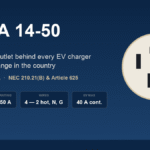
NEMA 14-50 Outlet Explained: EV Charger & Range Wiring (NEC)
What a NEMA 14-50 outlet is, the wire size and breaker it needs, when NEC 210.8(A) and 625.54 require GFCI, and how it compares to a 6-50 or a hardwired EV charger.

Torque Screwdrivers for Electricians: Why NEC 110.14(D) Now Requires Them
Why NEC 110.14(D) makes a torque screwdriver mandatory, what range electricians need, and the default torque values from NEC Informative Annex I and UL 486A-486B.
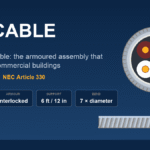
MC Cable (Metal-Clad) Explained: Types, Uses & NEC Rules
What MC cable is, the five types you will be handed on a job, ampacity from NEC Table 310.16, and exactly where Article 330 permits metal-clad cable — and where it does not.
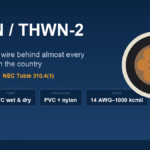
THHN / THWN-2 Wire Explained: Ratings, Uses & Where It’s Allowed
THHN wire meaning, THHN vs THWN vs THWN-2 ratings, ampacity from NEC Table 310.16, and exactly where the Code allows it. A field guide for electricians.
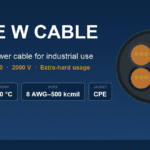
Type W Cable Explained: Portable Power Cable Ratings, Uses & NEC 400 Rules
Type W is a 2000 V portable power cable under NEC Article 400 — not a wet-location suffix. Ratings, construction, ampacity from Table 400.5(B), and where the Code permits and prohibits it.