
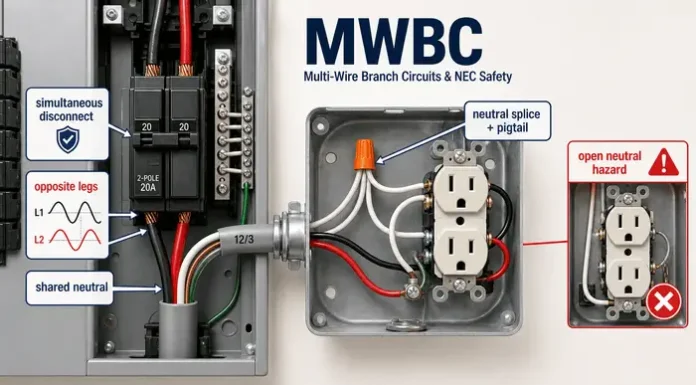
A multi-wire branch circuit (MWBC) lets you run two 120V circuits with three conductors instead of four. That sounds like a simple efficiency gain...

If you've ever had an inspector flag a grounding and bonding issue — or stumbled on an exam question about NEC Article 250 —...
You have put in the hours on the job. You know how to pull wire, read a panel, and get an inspection to pass....
If you are searching for the best electrician app in 2026, the options range from genuinely useful to glorified PDFs in app form. Some...
You've got an exam coming up and you need real practice questions — not a study guide to read, not a textbook chapter to...
NEC Table 310.16 is the ampacity table electricians use to find the allowable current for insulated conductors under normal conditions.
If you are studying conductor...
NEC stands for National Electrical Code.
In the electrical trade, the NEC is one of the most important code books you will use. NFPA describes...
A relocatable power tap is the code term for what most people call a power strip.
That sounds simple, but it creates a lot of...
An electrical safety program is the overall set of policies, procedures, training, and controls a workplace uses to reduce electrical hazards such as shock,...
Kitchen island and peninsula receptacles trip up more electricians than almost any other rough-in detail — not because the rule is complicated, but because...
If you are learning electrical theory or preparing for the journeyman exam, the phrase grounding a conductor can be confusing at first.
That is because...
GFCI testing is the process of checking whether a ground-fault circuit interrupter trips and resets the way it should.
That matters because a GFCI is...