


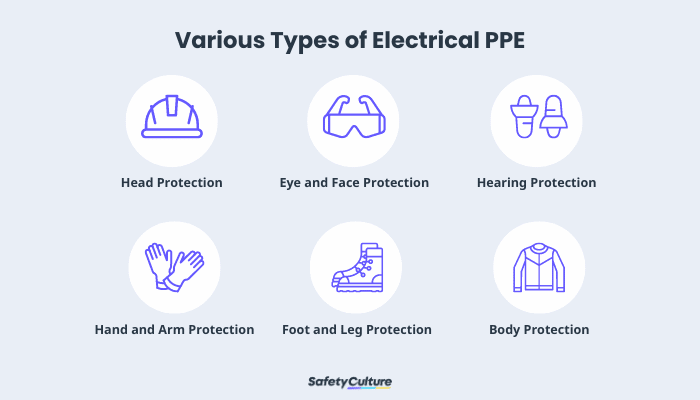
🛡️ Types of PPE
- Head Protection – Hard hats with electrical insulation.
- Eye & Face Protection – Safety glasses, goggles, face shields (for sparks/arc flash).
- Hearing Protection – Earplugs for noisy equipment.
- Hand & Arm Protection – Insulated gloves, rubber lineman gloves, protective sleeves.
- Foot & Leg Protection – Non-conductive safety shoes, dielectric overshoes.
- Body Protection – Flame-resistant clothing, arc flash suits (jacket, pants, hood).
⚙️ Choosing the Right PPE
- Match PPE to hazards: shock, arc flash, burns, chemicals.
- Select based on voltage rating.
- Ensure compliance with safety standards/regulations.
- Choose proper size & fit for comfort and safety.
- Buy from reliable, certified suppliers.
✅ Best Practices
- Train workers on correct use, care, and limits of PPE.
- Inspect PPE regularly (check for cuts, cracks, or wear).
- Use layered PPE (e.g., glasses + face shield).
- Follow proper donning/doffing procedures.
- Keep PPE clean, dry, and stored safely.
- Replace immediately if damaged.
🏭 Industry Examples
- Electrical: Insulated gloves, arc flash suits, voltage-rated tools.
- Oil & Gas: Arc flash suits, grounding mats, face shields.
- Mining: Rubber boots, insulating mats, voltage detectors.
- Machinery: Arc flash suits, insulating blankets/barriers.
- Automotive: Insulating mats, voltage testers, safe tools.
- Construction: Arc flash PPE, insulated ladders, scaffolding.
- Manufacturing: Safety glasses, gloves, flame-resistant clothing, LOTO procedures.
FREE PRACTICE TOOL
Think you'd pass this on a real exam?
Test what you just read with instant-feedback quizzes built around real code questions — not generic trivia.
5
Code standards
10,000+
Active learners
100%
Free to start
✓
Instant explanations on every answer, right or wrong
✓
NEC, BS7671, AS/NZS, CEC, and DIN VDE covered
✓
Bite-sized quizzes you can finish in 5 minutes
✓
No signup required to try your first quiz
Try a free quiz now →
No account needed · Takes less than 2 minutes